Showing posts with label Close Reading. Show all posts

Thursday, January 6, 2022

High Interest Low Readability Daily Common Core Weeks 1-4 (Middle School)


What is the strange sound that Dana keeps hearing next door?

Will the criminal be able to trick the couple with his fake injury and steal their car?


These questions can be answered after reading a few of the short stories from High-Interest, Low Readability Daily Common Core for Middle School.


Review literature skills in just a few minutes a day.  Cover literature skills with passages that are low-readability but are still developmentally appropriate for middle school students.

Click Here To Access It


Use this as an intervention for middle school students that need extra practice in reading.  Use this to review literature skills in small doses.  Use this to monitor progress.  Weekly progress charts are included.

Wednesday, September 6, 2017

Grade 2 Daily Reading Practice


Brand new! These quick, daily passages work well as morning practice or as daily warm-ups.  175 daily passages are included.  Each day of the school week contains a brand new passage plus a question.  Weekly progress charts and answer keys are included.

Nonfiction, fiction, myths, folktales, biographies, realistic fiction, fantasy stories, and poetry are all included.  This is a great way to keep reading skills sharp and review a variety of reading, social studies, and science topics.Click To Access Grade 2 Daily Reading Practice

Tuesday, March 29, 2016

More Weird and Gross

Do your students love high-interest passages?  These passages are fun to read and help students apply strategies as they read passages that they will enjoy.Click Here To Access It

Why Did You Make Weird And Gross Passages?


Kids love the "ick factor", and our world has plenty of it.  Strange microbes, weird bugs, and odd historical facts are great for helping students learn how science concepts apply to daily life.

Yes, this monkey is actually on my boat!

Okay, okay.  I have an admission to make.  I LOVE the weird and gross factor of nature too.  This love for nature inspires the passages that I create.  My ultimate goal is to make learning fun, and help students build an internal motivation to read.

What Does The Document Contain?


This document contains four illustrated passages, comprehension questions, written response prompts, and an answer key. Your students will enjoy making connections with what to read and the world around them. Simultaneously, this gives students the opportunity to apply reading strategies and build their comprehension skills.Click Here To Access It

Monday, March 21, 2016

High-Interest Nonfiction Passages

High-interest passages are winners.  They combine needed knowledge with information that students love to read.  I am working on several projects at one time.  One that is nearly complete with the editing phase is called More Weird and Gross Informational Text.  This is part two of Weird and Gross Passages.  It is for students that love high-interest reading passages. Click the above link to access Part 1.

Part 2 of this series continues to provide startling information.  In kid-friendly language and with accompanying comprehension activities, students will learn about strange but true historical facts and odd information about microbes.


Check back.  More Weird and Gross passages will be released within the next few days.  Or click the follow button to receive a notification.


Sunday, March 13, 2016

Fiction Passages That Are Organized By Guided Reading and Lexile Levels

Creating these leveled passages and the illustrations that accompany them was a great amount of fun.  Best of all, this resource makes differentiating instruction so much easier.

Save hours of planning time.  The document contains two fiction passages as well as questions for each Lexile/guided reading level.  The questions are written at different levels of Bloom's Taxonomy to help students practice comprehension skills.  Follow the link to access this document and more guided reading levels.

Click Here To Access This Document


Monday, October 12, 2015

Using High-Interest Nonfiction Passages To Build Comprehension


The more students know about a topic, the more they tend to like it.  Students love reading fiction.  The tricky part is trying to get them to read informational text.

Doing something as easy as taking a nature hike might be enough to grab their interest.  I love nature and enjoy going into the field to experience nature before I write about it.

The pioneers and Native Americans made salads
using dandelion leaves.

I foraged for native plants that have been used throughout history for food.  I would not recommend doing this with a class, but teaching students an unusual fact about plants that are in their own backyards can spark interest in reading more about plants.


Black walnut seeds provide food for squirrels and other rodents.  They also are the home of maggots that
keep safe in the warm layer under the outer shell of this seed.


This is a picture of a wild plant called bloodroot.  It is an ephemeral.
Ephemerals are plants that bloom for just a few weeks out of the year.
They grow in early spring before larger plants are able to grow and 
compete with them for sunlight.


Monday, February 23, 2015

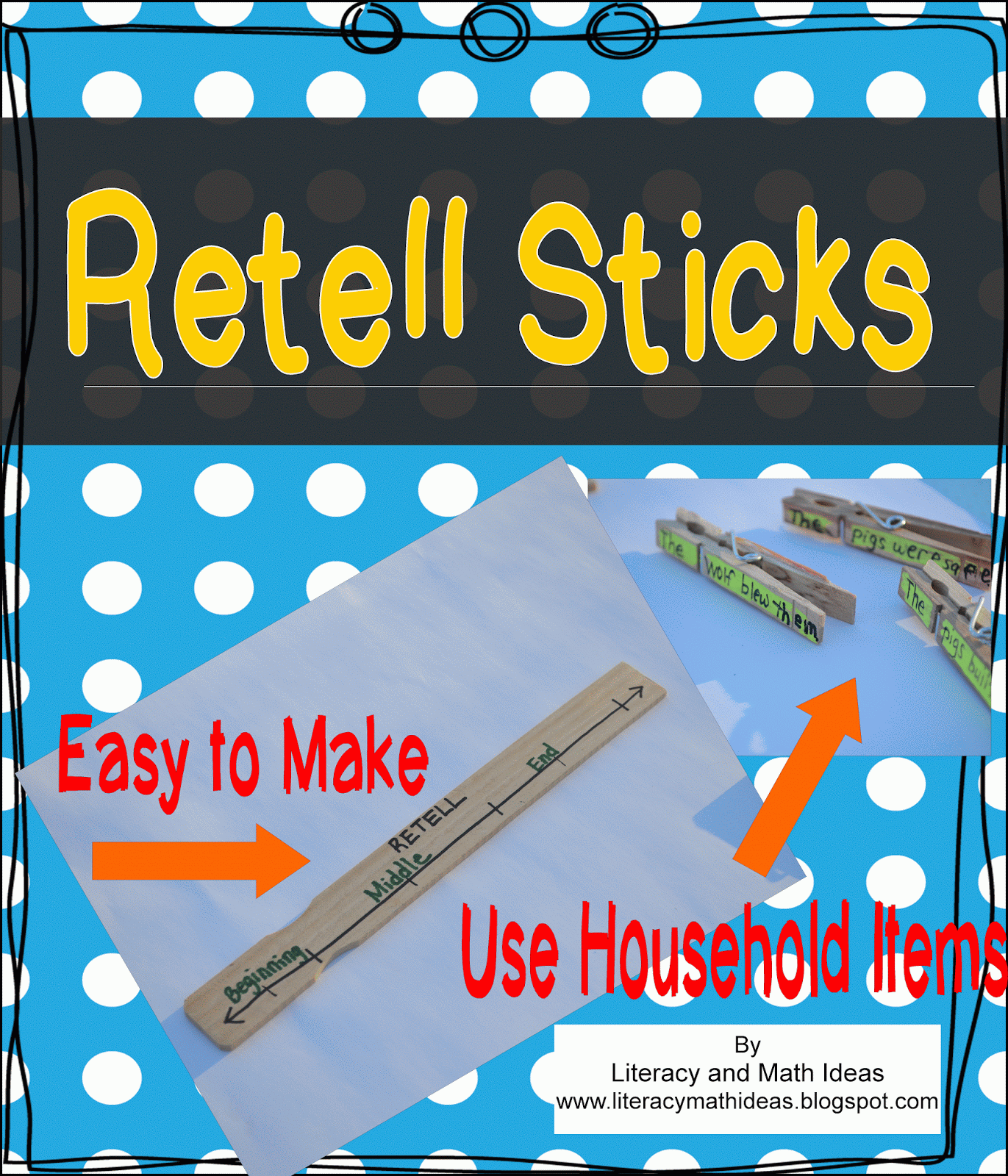
Make Retell Sticks


Making classroom tools from household items is a lot of fun.  This is a literacy center activity that you can make using objects that you most likely already have in your home.


If you have done painting in your home, you just might have a few leftover paint sticks.  If not, your local hardware store might hand you a few sticks free of charge.  

I began by dividing the paint stick into three parts.  They are labeled: beginning, middle, and end.


On some clothespins, I wrote events that occurred in a story that was recently read to the class.  (Put a few wrote details in the mix to test comprehension.)  Students then have to place the clothespins in the correct section on the paint stick.


For Additional Resources For The Classroom, Visit My Store


Friday, December 5, 2014

Free Close Reading Passage of the Week


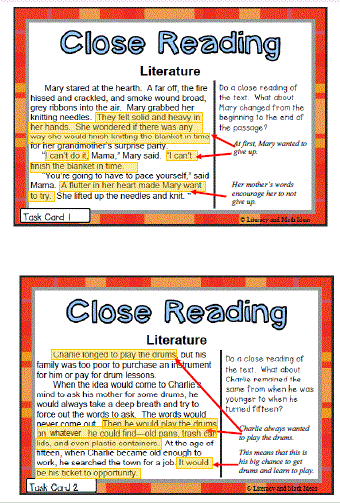
Greetings everyone!  This month I am adding a special feature to my blog.  Each week I will post a free close reading passage of the week.  This week's passage comes from Common Core Close Reading Stories.  These are high-interest, original literature passages that are used to review close reading skills. Feel free to print the free sample passage below and annotated key.  For classroom or school use only please.


The close reading stories and free close reading passages of the week are the property of Literacy and Math Ideas. Permission is granted for classroom or school use and cannot be sold.


Also Available


Click a Grade Level Link For Daily Common Core Reading Practice (Quick Common Core Passages in 5 Minutes a Day)


Friday, September 12, 2014

Close Reading in the Content Areas


Closely reading text is a strategy that can be implemented easily across the content areas. With the push for students to read an increased amount of nonfiction text, being able to interpret a variety of passages is important. 

When a student does a close reading for fiction, they will mostly focus on character traits, inferences, as well as main idea. Informational text close reading focuses on identifying cause and effect relationships between events, summarizing, and also comparing the viewpoints of different authors.For free close reading bookmarks, click here.

Closely reading text across the content areas helps students realize that reading strategies should me used across all subjects.


This is an example of science text that was closely read from my product, Matter and Energy Close Reading Passages (Click Here).  It contains four different reading levels of differentiated passages.


Friday, August 29, 2014

Create A Close Reading Kit


Close reading kits are handy pouches or small boxes that individual students can use in order to closely read text.  Instead of looking for a highlighter or additional resources during the middle of guided reading or guided math, students will have a variety of types of tools at their fingertips inside of their personal kits.


 You will need close reading bookmarks Click Here To Access Them For Free Here, colored pencils, highlighters, a pencil, a pouch, and clay to create your kits.

The clay is optional, but I think that it is helpful for both reading and math.  I roll pieces of clay into thin strips and use them to underline text that is on laminated task cards.
This is from my Differentiated Close Reading Task Cards.  The card has been laminated and clay is used instead of a colored pencil.

The different colored highlighters can help students color code their ideas.


I purchased the plastic pouches for $1 at Target.  Either small plastic containers or plastic pouches can be used to store your individual kits.


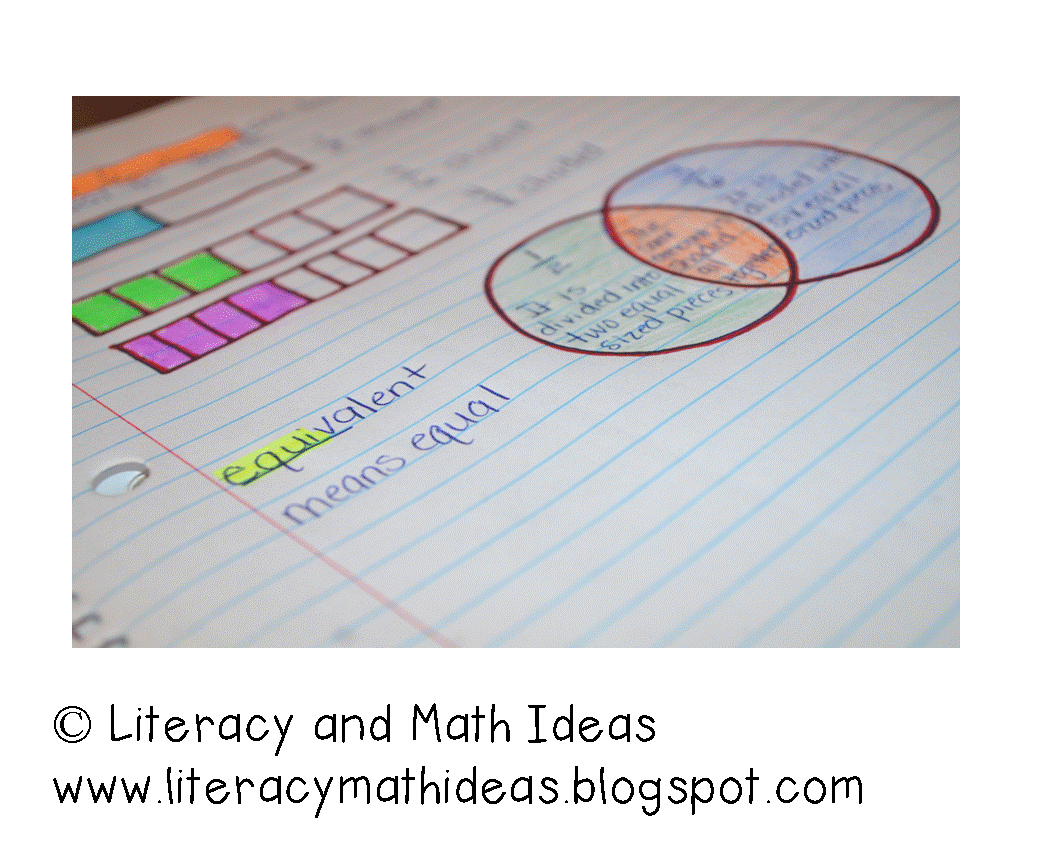
The kits were also used during math time to make it easier for students to understand math concepts.  

To access free close reading bookmarks Click Here